Speakers
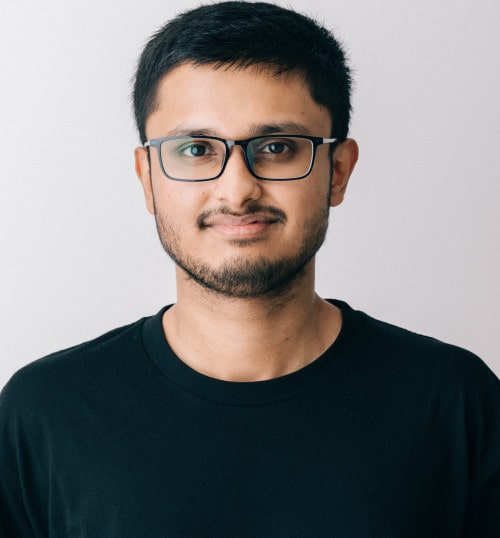
Sayak Paul
Hugging Face
Research Engineer at Hugging Face working on image and video generation, with a focus on controllability and inference-time scaling for diffusion models. His research includes ReflectionFlow [28] (reflection in diffusion models) and MaPO [9] (reference-mismatch in diffusion alignment). Co-maintains the Diffusers library.

Linoy Tsaban
Hugging Face
Machine Learning Engineer at Hugging Face working at the intersection of AI and the arts, with a focus on image and video diffusion models. She contributes fine-tuning and inference-time control pipelines to Diffusers, and co-authored LEDITS and LEDITS++ (spotlight at NeurIPS'23; CVPR'24). She has organized a generative AI meetup attended by over 500 people.

Ravi Addanki
Black Forest Labs
Researcher at Black Forest Labs, where his work focuses on post-training and aligning image and video diffusion models to user intent. He has worked on pretraining and post-training of multimodal LLMs and diffusion models at Google DeepMind, Luma AI, and BFL.
Hila Chefer
Black Forest Labs
Researcher in the Fundamental Research team at Black Forest Labs and incoming Assistant Professor at Tel Aviv University (starting October 2026). Her work focuses on understanding, interpreting, and controlling deep foundational models, including transformer explainability, attention-based semantic guidance for diffusion models (Attend-and-Excite [12]), Google's Lumiere video model, and Meta's VideoJAM training framework. During her PhD at Tel Aviv University, she was a visiting researcher at Google Research, Google DeepMind, and Meta AI.